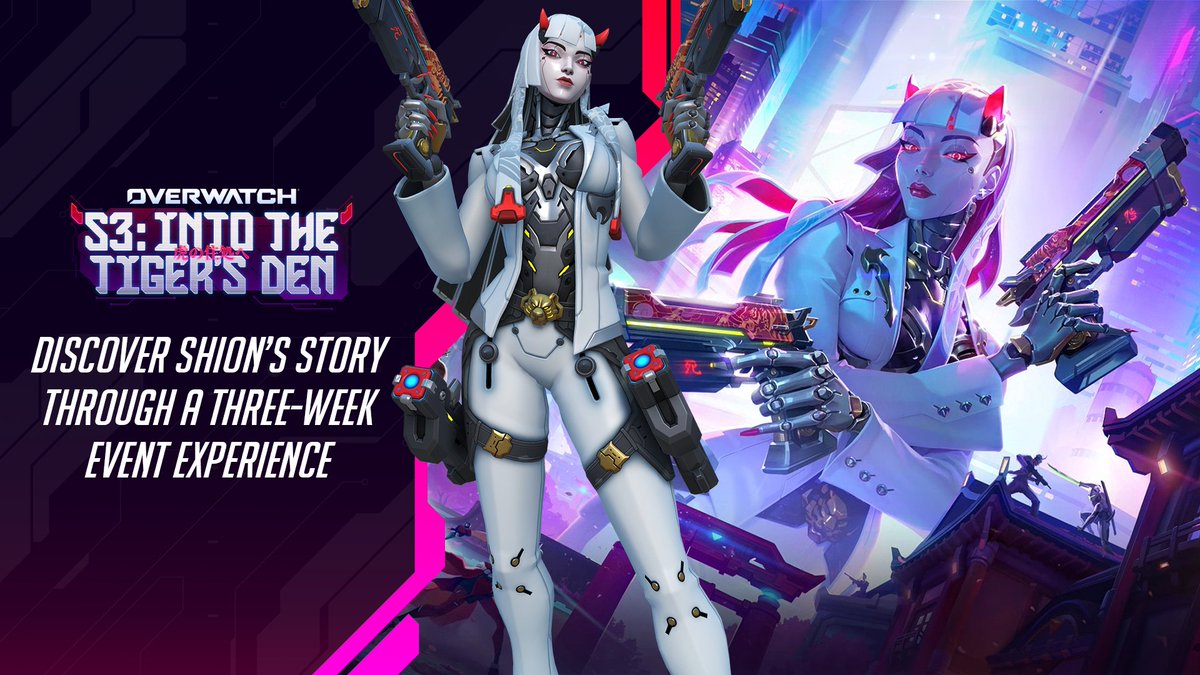
overwatch season 3 brought a new hero, shion, and a new event called anima strike to celebrate. visually, you complete missions to make progress on a “map” of nodes that unlock cosmetics and story bits. by and large tho, you just play the game and make progress.
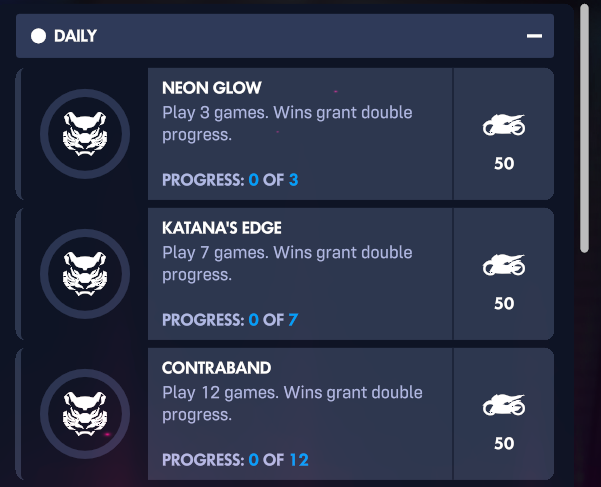
here’s an example of the daily missions – play the game. if you win, you make double progress. easy enough. this is a pretty common setup in overwatch missions.
however,
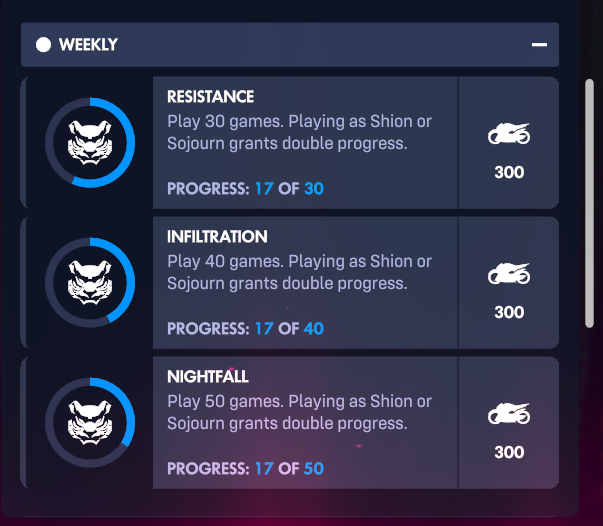
here are the weekly missions – play the game, but only get double progress if you play shion (the new hero) or sojourn (her lore rival i guess?). don’t need to win, just need to play as them.
this is where, imo, the math doesn’t work out for two reasons.
shion and sojourn are both damage role, so if you’re playing in role queue (the most populated mode), immediately that’s only available to people queueing as damage (as opposed to tank or support). the problem is that damage role is already the most popular role, making it have the longest queue time. pushing more people into this role for double progress greatly increases the time it takes to find a game. (there is a “flex” queue that slots you into whatever is needed and it’s very rare during this event to ever get damage since that role is rarely ever needed)
the common mission setup of “if you win, make double progress” means that after any given game, one team gets double progress and the other team gets regular progress. it’s a team-wide bonus. that means 50% of the players involved, 5 out of 10 players, always get the bonus. in the case of these weeklies where you have to play shion or sojourn, that means 0 players at worst (nobody on either team picked them) and 4 players at best (both teams picked both heroes) out of 10 will make progress. the best case scenario is still less than half the players involved.
it’s ultimately not a huge deal, just some cosmetics and flavor, so not the end of the world just makes for a grindier grind than players expect. we’re coming off the back of the 10th anniversary event that, over its course, nerfed the amount of games you had to play multiple times and even extended the time limit to do it in. it gives the feeling these retention event tunings could use a bit more love before being shipped. but considering things like weekly time limits on progress and a player-base that is known to specialize in specific roles, it makes for a bit of bad friction. i’m curious to see if week 2’s weeklies are any different as a result of this.
(yeah this is about hollow knight: silksong but it’s bigger than that.)
we cannot escape the firehose of discourse around silksong’s challenging nature. i’m not here to talk about difficulty really, but to touch on one of the topics that people feel strongly about: runbacks.
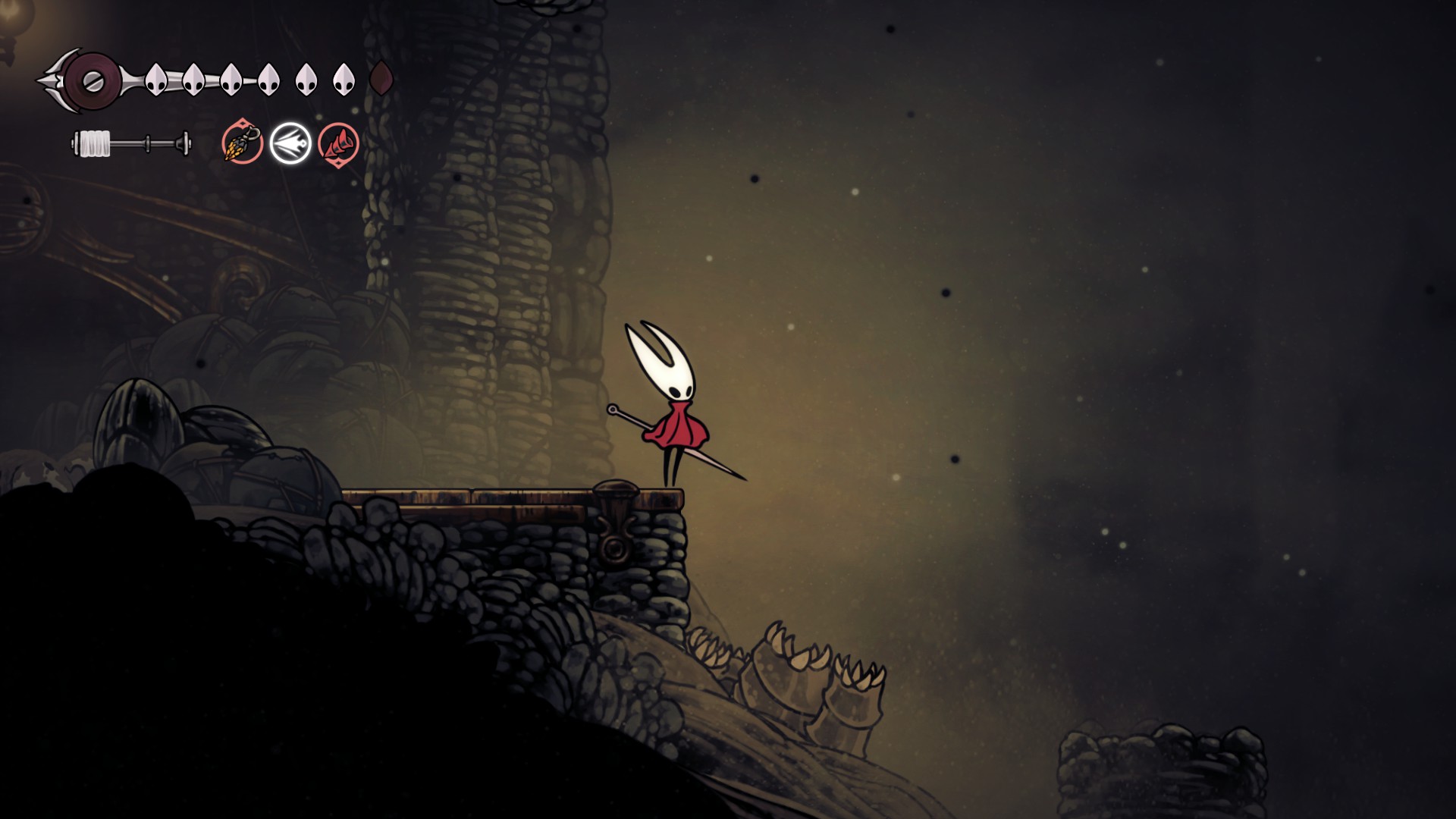
blasted steps in hollow knight: silksong. iykyk.
runbacks refer to the traversal between the last checkpoint and the boss fight you keep dying on. sometimes the checkpoint is near the boss encounter, making for a quick return after death, and sometimes you spend longer getting back to the fight than you do actually in the fight before dying again. if you listened to reddit, every boss encounter should have a checkpoint three feet away from it, but i’m here to make a case for the runback:
the runback to the boss fight is also the boss fight.
i don’t want to be a Solo Dev (with 20 contractors in the credits).
i’ve had multiple folks tell me “you should work on your own thing!” with various tutorials and tricks for doing art while i’m not an artist. i’d love to learn how to draw, how to paint, how to texture, how to model, etc, because those seem like interesting avenues for expression that are different to what i know and do. but i don’t want to learn them just to do it myself in addition to design and coding.
i don’t want to remove other humans from the equation.
i am here to make games with people because i believe the shared experience is greater than the sum of its parts.
i want to make as many games as i possibly can with as many different people as i possibly can.
making games is a fundamentally social experience for me.
i started this up a month ago with the naive hope of blazing through it to be ready for avowed but i pretty quickly realized this wasn’t something i wanted to speed through. i told myself avowed will be there for me when i’m ready to play it, so i savored pillars of eternity 2 deadfire and goddamn dude. god damn dude. some good fucking food!!
i loved the first one so i had no doubt i’d be into the sequel, but i just didn’t expect it to hit so much harder for me. it’s so narratively dense and rich without feeling impenetrable. the variety on display in character depth is masterful, i truly felt bad swapping some of my favorites out for certain quests because i would MISS them. and the game’s overarching philosophical and religious themes around mortal self-determination and agency, the gods’ duty to mortals, and what faith means in the light of this all is just brilliant.
a discord pal mentioned a short freeware game called hero core during a bigger conversation the server was having around combat design and i thought, what the hell, why not, it’s saturday, let’s download this bad boy and give it a go.